
Legend says that Demeter, the goddess of the harvest, was searching for her lost daughter, and, in despair, dropped her sickle to earth. It landed by the sea and Trapani grew in its place — in the shape of a sickle, of course.
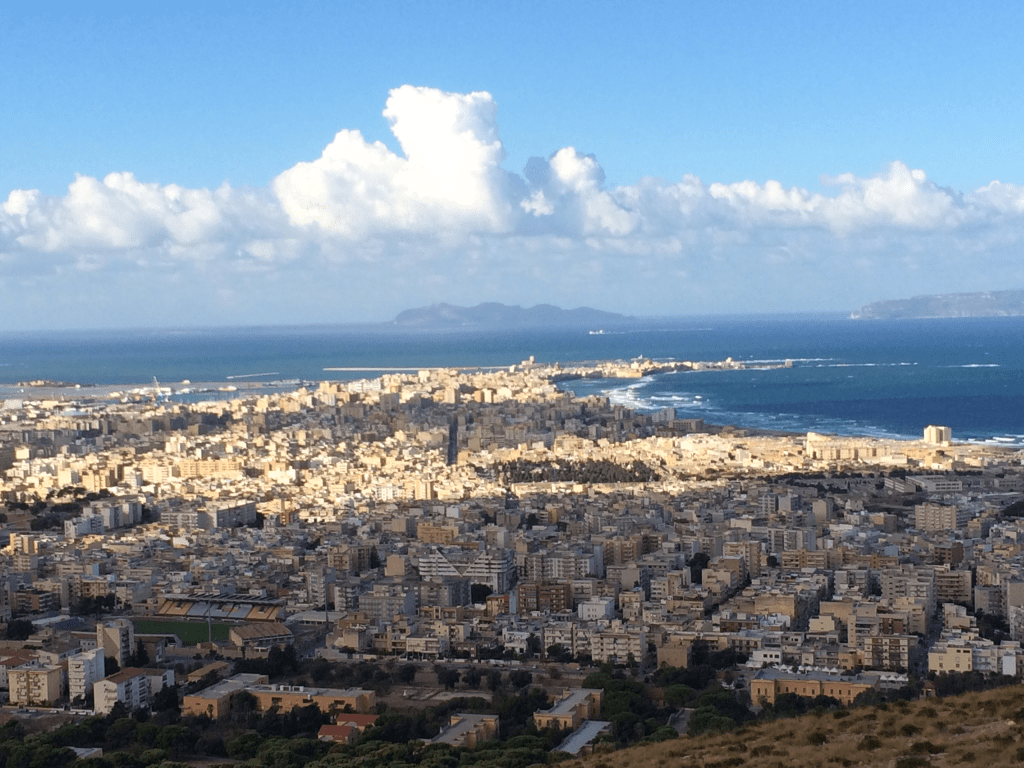
Trapani is not nearly as famous as its cousins Palermo, Catania, Siracusa, and Agrigento, nonetheless, it’s a delightful city in its own right. It’s also a great launching point to the beautiful Egadi Islands, the hilltop magical town of Erice, the Zingaro Natural Reserve, the nearby architectural treasure of Segesta with it’s ancient temple and amphitheatre, and the salt pans, sometimes called Sicily’s white gold.
It’s large enough to stand on its own as a destination, but still small enough to be charming. But hey, if you need to get your fix for big city life, Palermo is an easy ninety-minute drive.
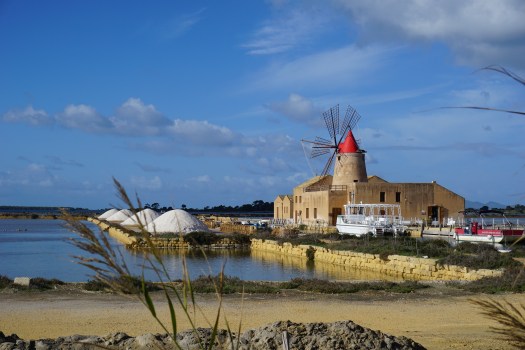
2,700 years ago, the Phoenicians were thought to have been the first to use the shallow coastal waters for salt production. Windmills came into use during medieval times, and were used to pump water out of basins, leaving piles of salt.
Trapani figures to be a main setting in the latter part of Leaving Marinella. It’s from this city that Thomas’s grandson, Tony, decides to study Italian for the first month of his stay in Sicily. It’s also here that Tony meets Michela, a captivating woman and irresistible personality.
Unlike Marinella, the fictitious Sicilian town in the book where Tommaso is born, Trapani is real, alive, yet laid-back. When Joanna and I lived in Trapani, we felt like it was our secret hideaway from the world — even though it’s mentioned in travel books.

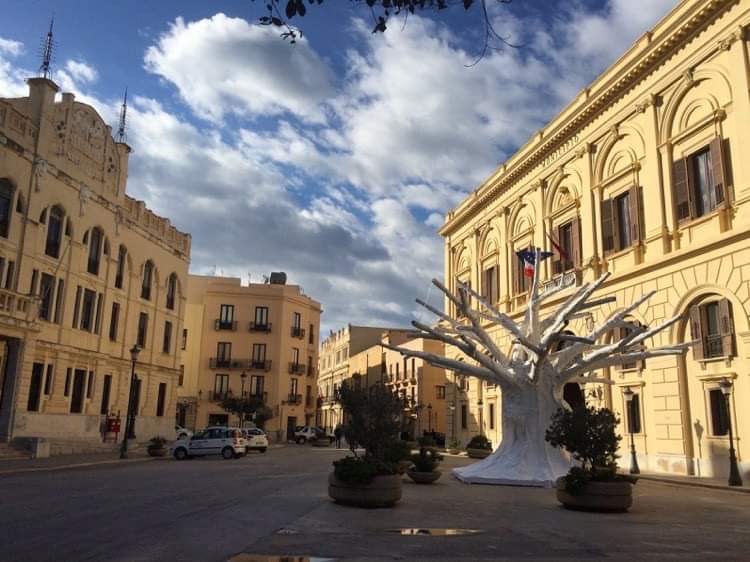
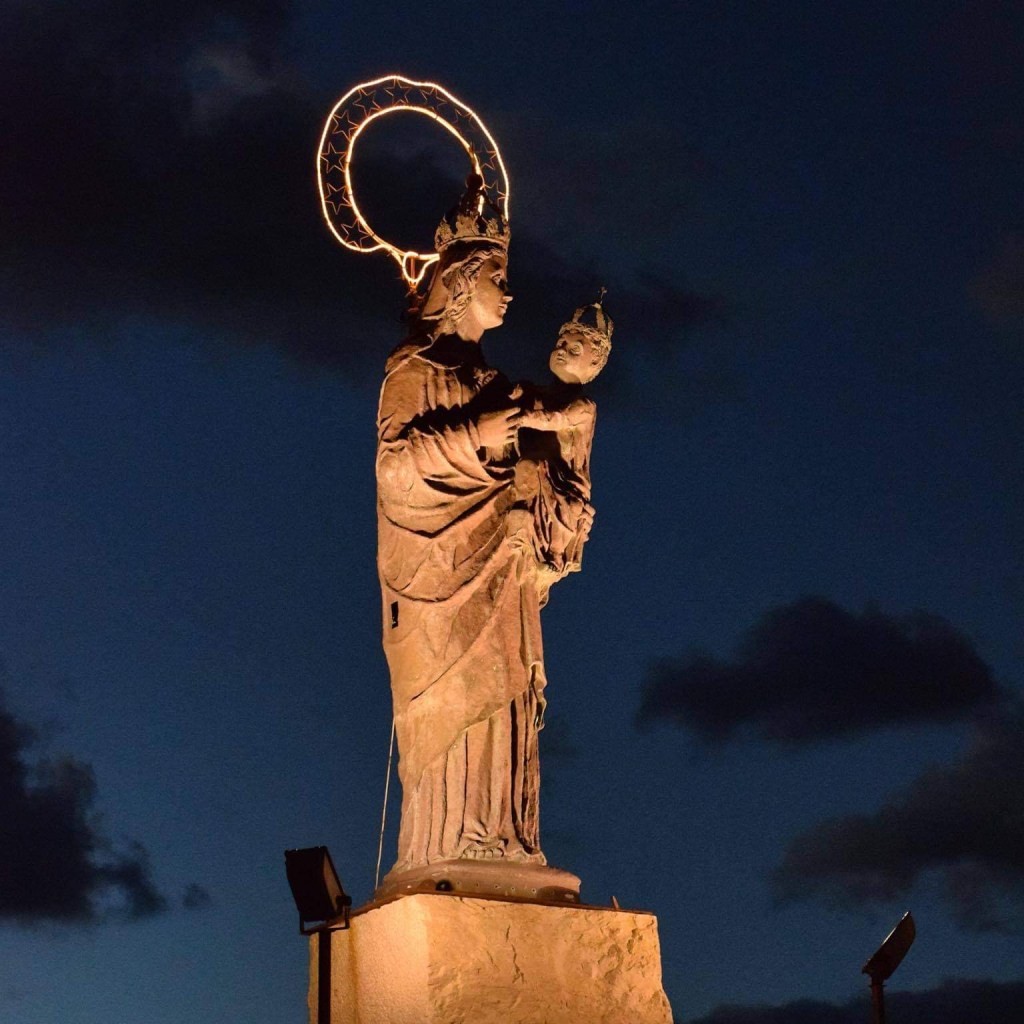
If you ever find yourself turned around in the city, you can count on Maria Stella del Mare to set you on the proper course. The statue commemorates the thirteen victims who lost their lives aboard a ship called the Maria Stella, which hit a mine off the island of Giglio and sunk in 1947.
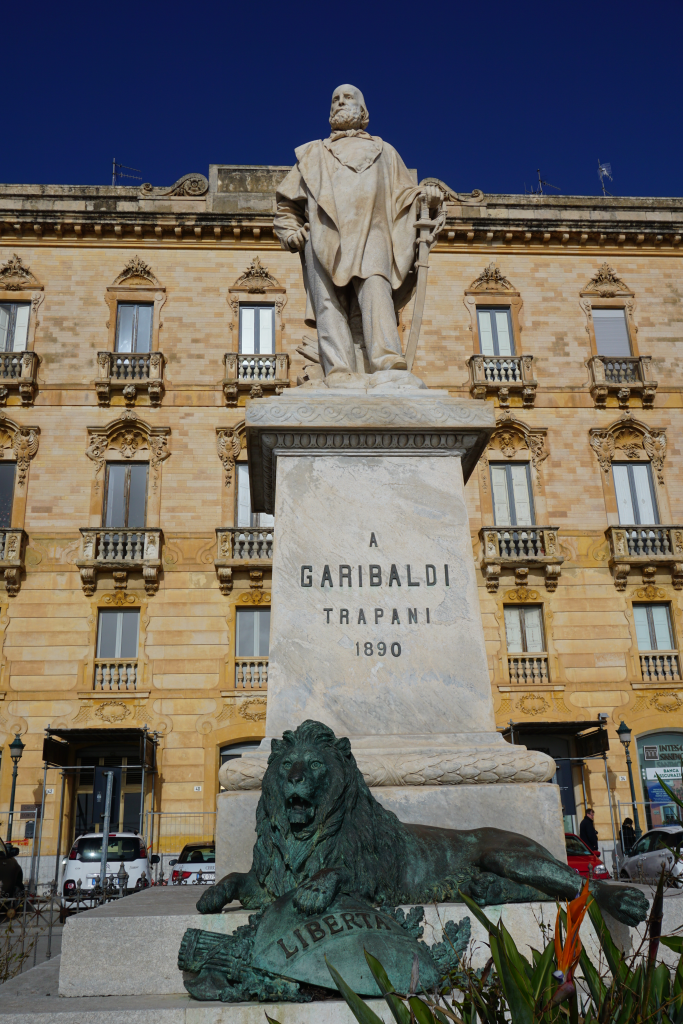
The statue of this Italian general and patriot is close to the port of Trapani and serves as a reminder of his significant contributions to Italian unification and the creation of the Kingdom of Italy in 1861.
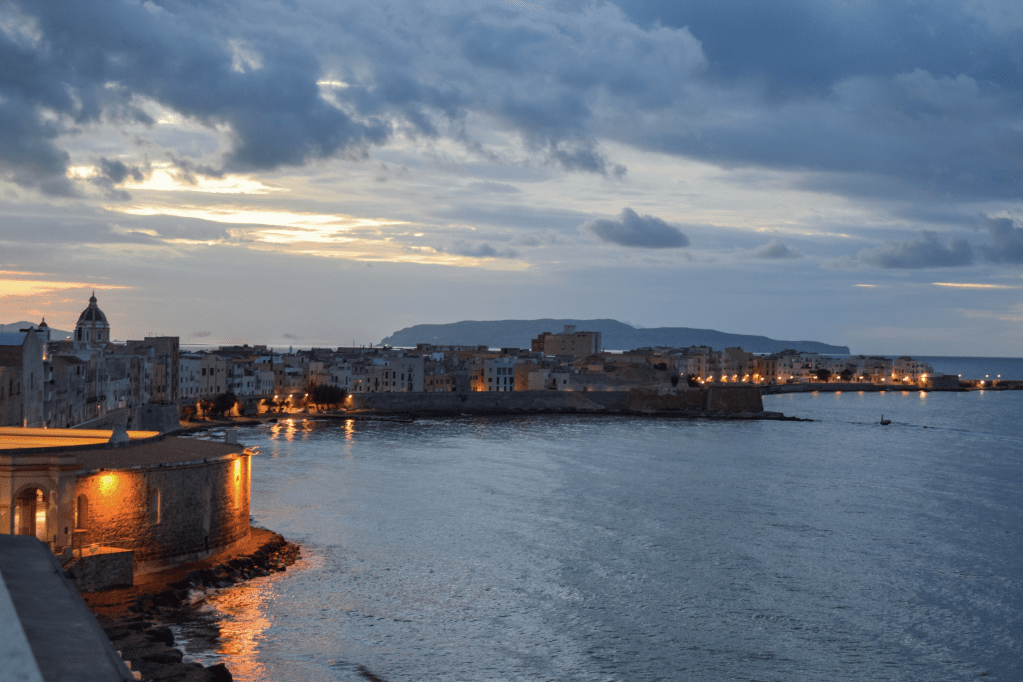

Trapani has a population of 70,000 but it doesn’t seem like it—particularly from the viewpoint of living in the old town. It’s deceptive though, because once you leave the town center, Trapani spreads out like a lawn chair lazing in the backyard.
The city is well known for the Easter Holy Week activities highlighted by a procession taking place starting on Good Friday and continuing into Holy Saturday. Twenty floats with wooden statues depicting the passion of Christ are paraded through town.
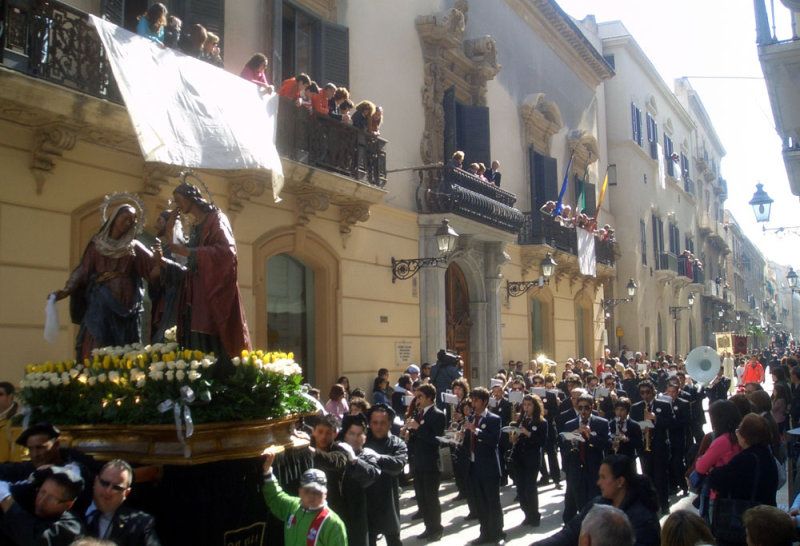
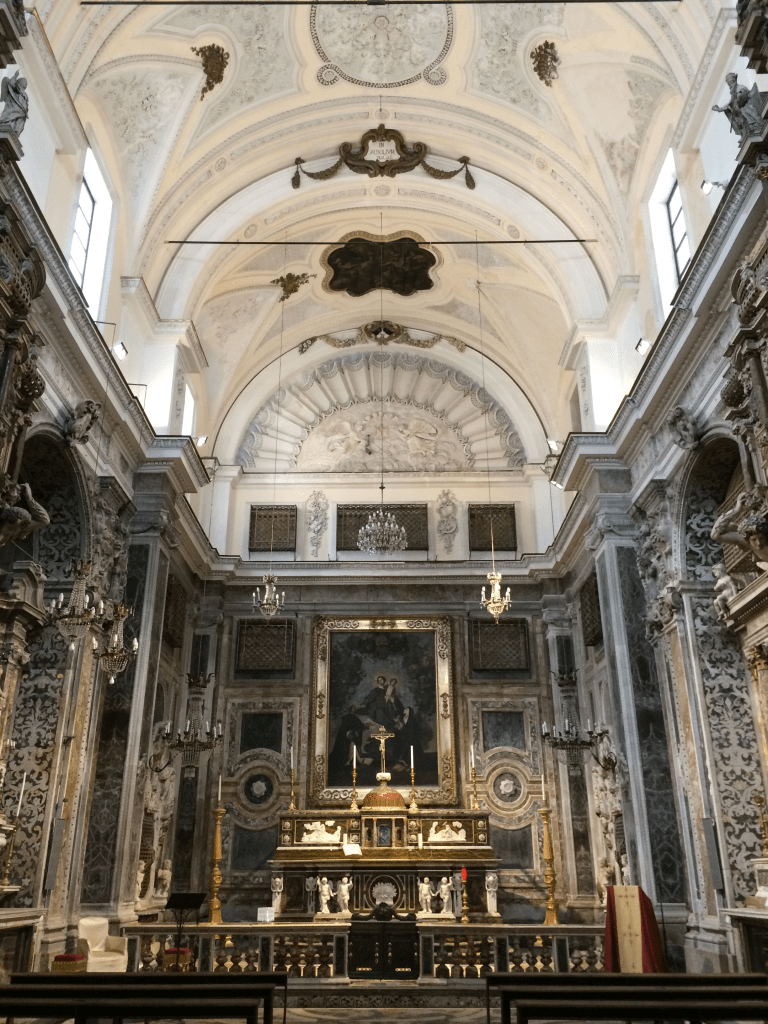
If churches are your thing, you won’t be disappointed. Trapani is known as the city with a hundred churches (so are Erice, Lucca, and perhaps other Italian cities). I’ve never counted but there’s hardly a block to walk by without finding one.
There’s also no shortage of fine restaurants. I promise you won’t go hungry.

210 Grammi Ristorante Laboratorio is one of our faves and was on our weekly rotation. Fresh pasta is their specialty. I recollect great desserts too!
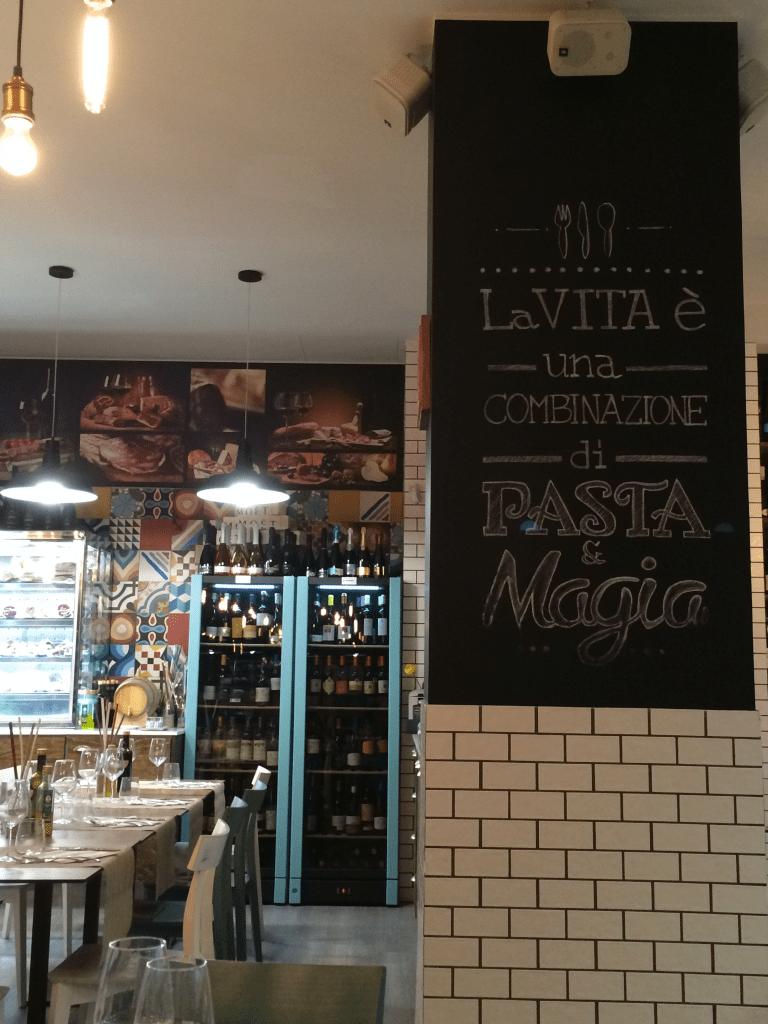
The sign pretty much says it all. Life is a combination of pasta and magic.

Another of our favorites, Pizzeria Calvino, has lots of personality and great pizza. These pizza chefs, called pizzaioli, know what they’re doing. Intrepid Joanna walked into the kitchen and asked to take a picture. I waited outside — you know, just in case.
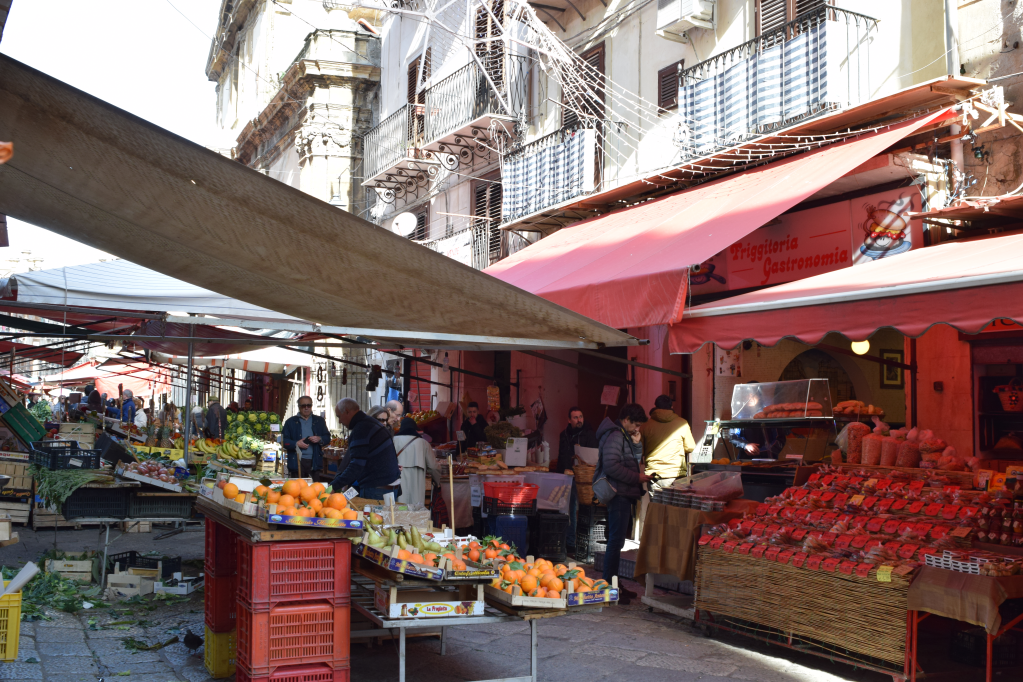
Open-air markets are everywhere for those dinners at home.
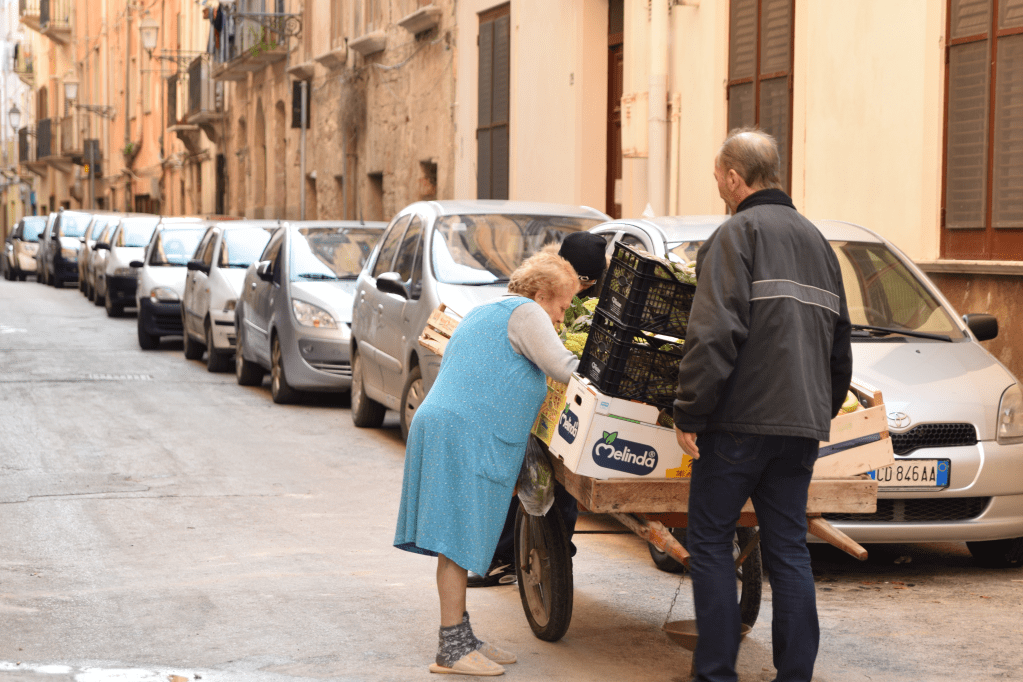
It’s a fine town to tackle by foot; we never got tired of walking the streets. I promise you’ll daydream of dropping out and disappearing into the quiet seaside life whenever you stroll through this historic city.
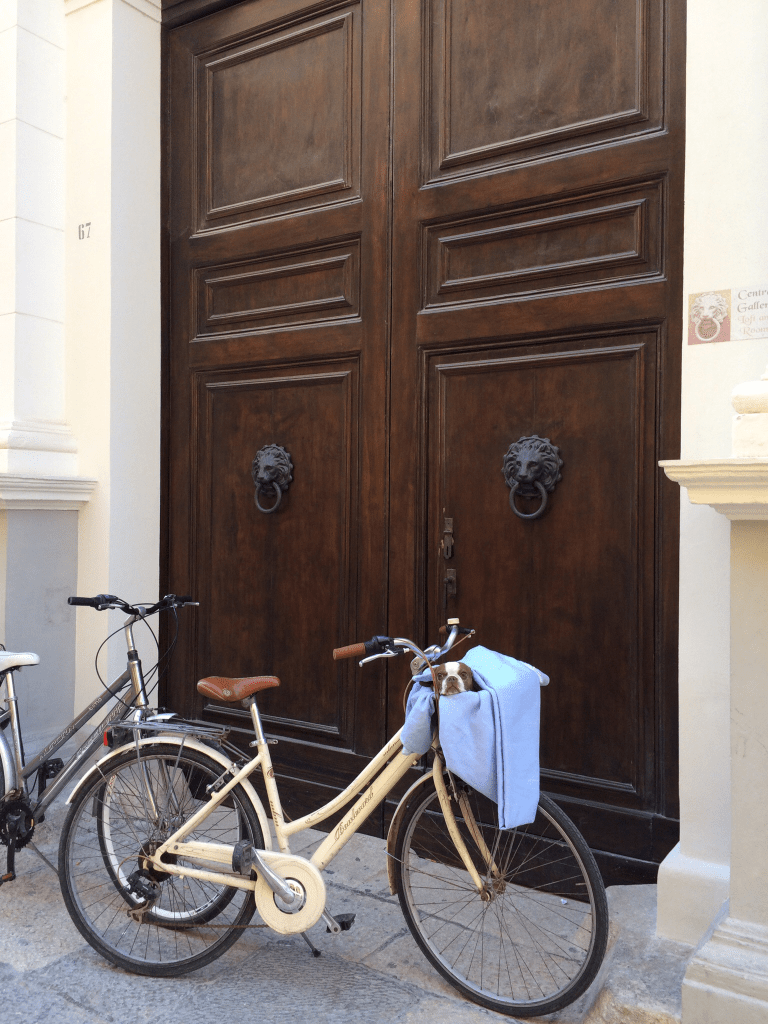
That’s my little buddy learning how to ride a bike in Trapani, uh, I mean, ride in a bike basket. She’s fearless now.
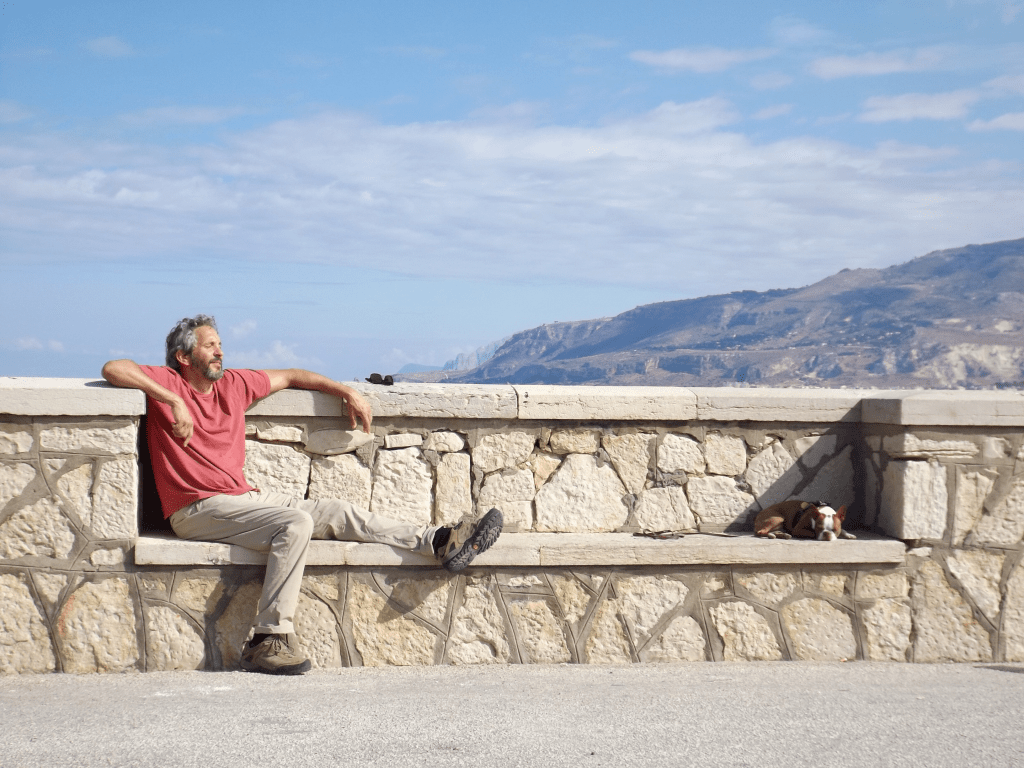
 Christopher Amato
Christopher, these pix were awesome. We were there in 2005. Loved it. you pix are better than mine.
LikeLike
Thanks, Carole. Joanna took most of the photos.
LikeLike