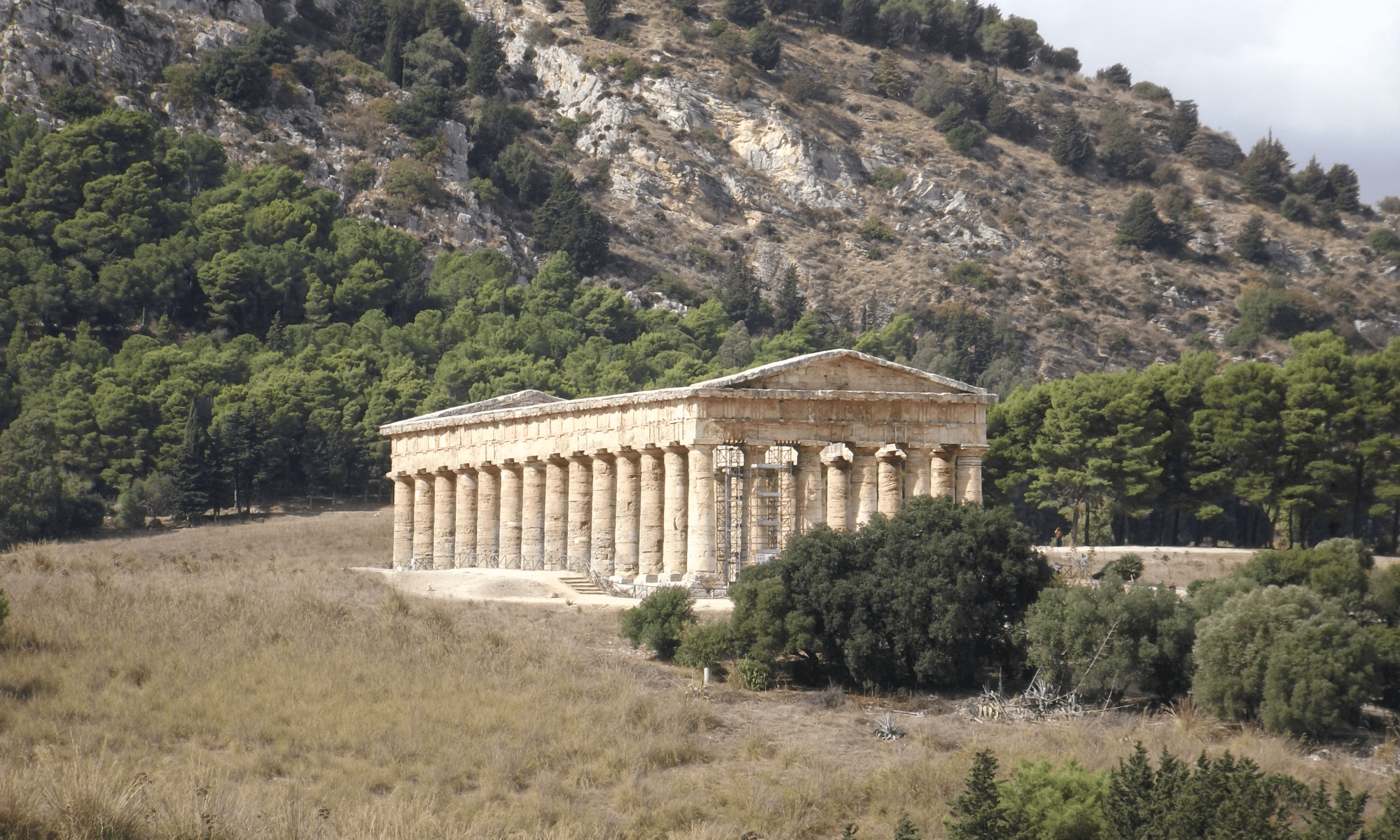

Off in the distance, you can see a remarkably well-preserved but never finished Doric temple.
We’ve been to Segesta a few times. It’s only a thirty-minute drive from Trapani and there’s never more than a scattering of tourists. Amazing because it’s such an idyllic setting, but largely ignored. One thing that strikes me is the quiet. You can find a rock to sit on, close your eyes, and enjoy the peace and calm.
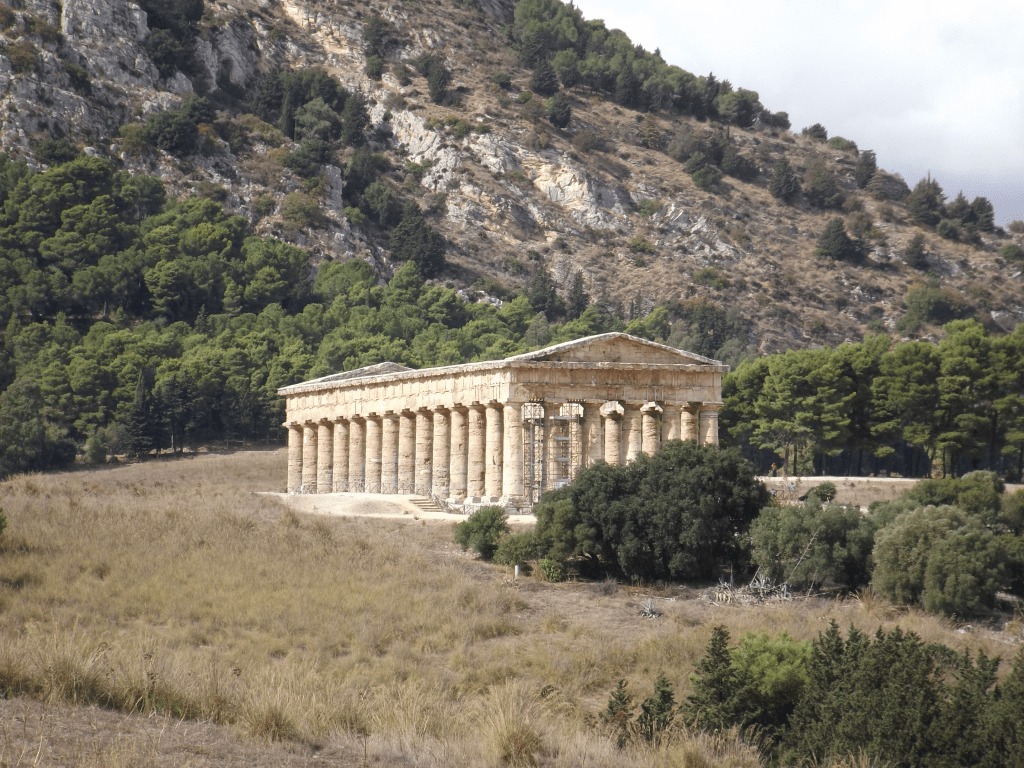
Take note of the absence of a roof. No one knows why the temple was never finished, but as you walk around it, you’ll find yourself amazed at it’s fine condition. Again, it’s quiet, almost eerily quiet.
Segesta, like Erice, was first inhabited by the Elymians. The temple was thought to have been built circa 500 BC. No one knows for certain the origin of the Elymians—modern day Turkey or Greece—but it makes for interesting reading. Segesta’s history reveals a site that was conquered, plundered, and reborn only to be conquered, plundered and reborn again by a list of who’s who of various invaders. The city was finally abandoned in the thirteenth century.
I love to imagine the conversation of these mysterious people from so long ago. Maybe 2,500 years from now, people will imagine what we were like?
In Leaving Marinella, Tony visited Segesta as part of a cultural outing with his classmates at the language school where he studied. Besides achieving the obvious goal of learning a second language, attending a school has another great benefit—seeing varied cultural attractions with native guides who know the sites inside and out.

This hilltop amphitheater—thought to have been built in the same period—is just a short walk from the temple . We’ve been there a few times, but I especially recall one occasion when my wife and I listened to a high school group seated in the amphitheater doing a reading of a play.
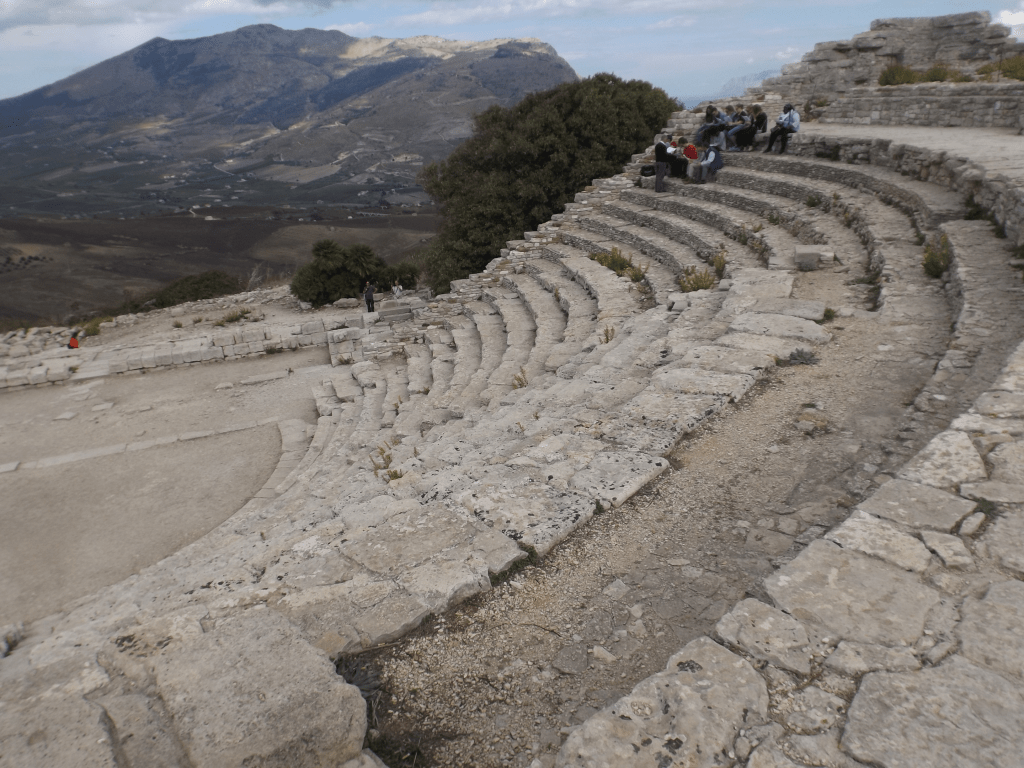
I’m betting one day years from now these youngsters will look back with fond memories of that special experience.
 Christopher Amato
You taught me something new today! Thanks for that!!!
LikeLike
You’re welcome! 😘
LikeLike